Design Tips for Small Bathroom Shower Areas
Corner showers utilize often underused space, fitting neatly into a bathroom's corner. They are ideal for small bathrooms as they free up floor space and can be customized with glass doors or enclosures to enhance visual openness.
Walk-in showers offer a sleek, barrier-free option that makes small bathrooms appear larger. They typically feature frameless glass and minimalistic fixtures, providing a modern look while improving accessibility.
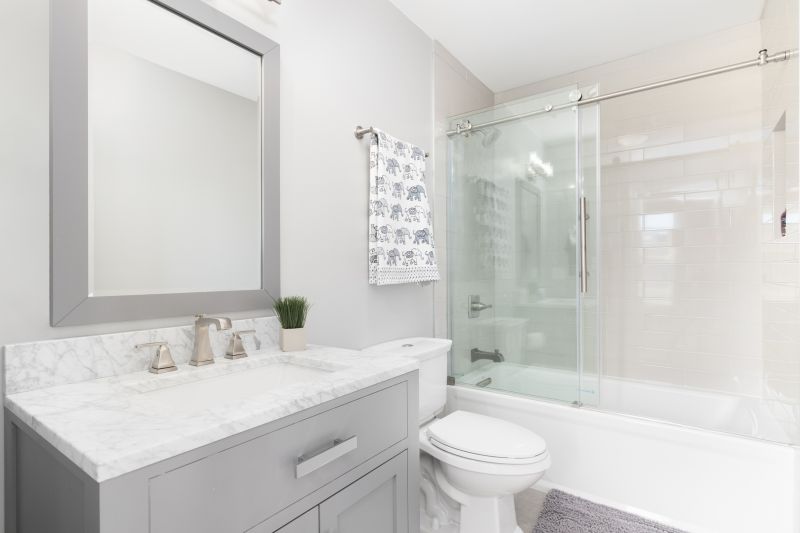
A compact corner shower with sliding glass doors fits snugly into a small bathroom, optimizing space without sacrificing style.
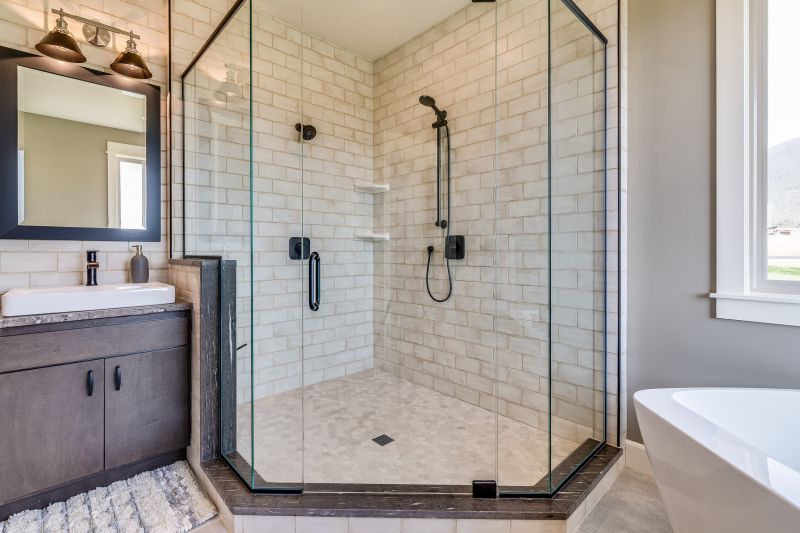
This layout features a frameless glass enclosure that visually expands the space and adds a contemporary touch.
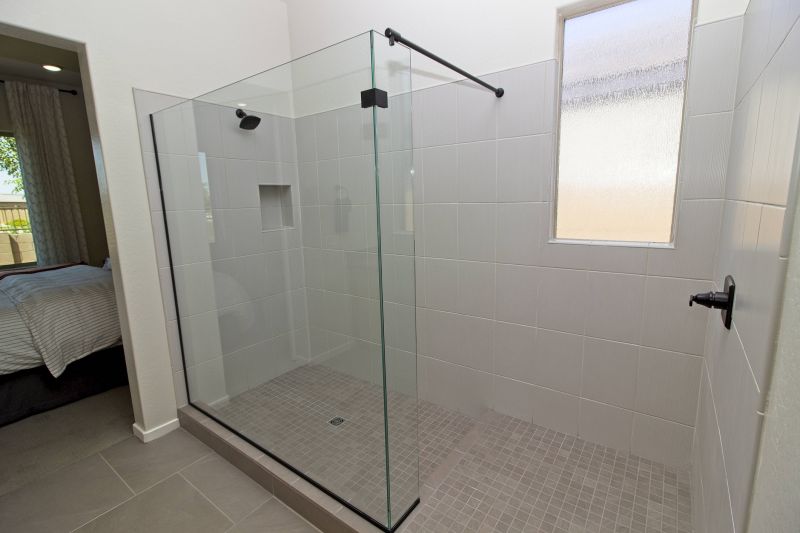
Incorporating built-in shelving within the shower area provides storage without cluttering the limited space.
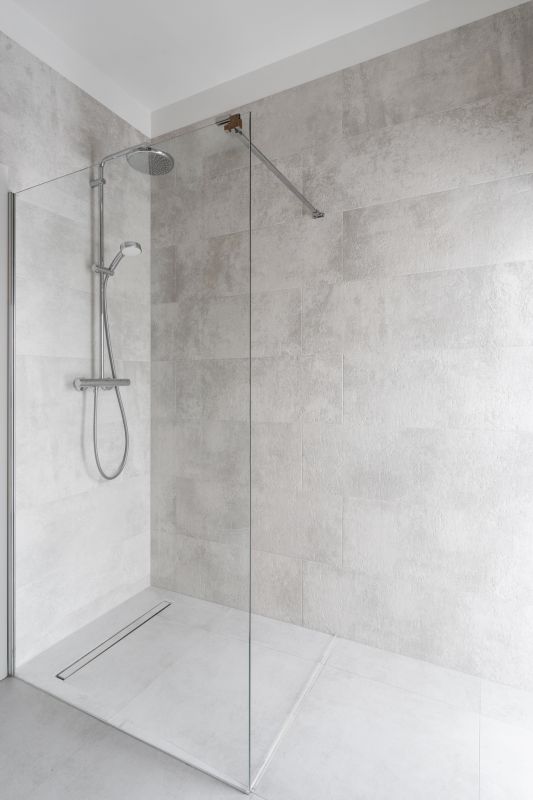
A simple, streamlined shower with a rain showerhead and clear glass enhances the sense of openness in small bathrooms.
Optimizing space in small bathroom shower layouts involves selecting the right configuration and fixtures. Compact showers with sliding or bi-fold doors eliminate the need for swinging doors, saving clearance space. Incorporating vertical storage solutions, such as niche shelves or wall-mounted caddies, helps keep essentials organized without encroaching on the limited footprint. Additionally, choosing light colors and transparent glass can make the shower area appear larger and more inviting.
| Shower Layout Type | Advantages |
|---|---|
| Corner Shower | Maximizes corner space, suitable for small bathrooms |
| Walk-In Shower | Creates an open feel, accessible design |
| Tub-Shower Combo | Provides versatility in limited space |
| Neo-Angle Shower | Efficient use of awkward corners |
| Recessed Shower | Built into wall cavity for seamless look |
| Sliding Door Shower | Reduces door swing space needed |
| Pivot Door Shower | Flexible entry options |
| Frameless Glass Shower | Enhances visual space and modern appeal |
Incorporating innovative design elements can further enhance small bathroom shower layouts. For example, using large-format tiles reduces grout lines and creates a sense of continuity, making the space feel larger. Light fixtures and strategic lighting can brighten the area, emphasizing openness. Additionally, selecting fixtures with clean lines and minimal profiles contributes to a clutter-free appearance, which is crucial in compact environments.
Considering accessibility and safety is also important when designing small bathroom showers. Installing grab bars and anti-slip flooring ensures safety without compromising style. Compact shower seats or benches can add comfort for users who need additional support, and thoughtful placement of controls can improve ease of use. These features, combined with smart layout choices, can create a functional and attractive shower space within a limited footprint.
Ultimately, small bathroom shower layouts should balance practicality and design. Thoughtful planning allows for efficient use of space, while aesthetic choices can make the area feel more open and inviting. Whether opting for a corner unit, a walk-in design, or a combination of features, the goal is to create a shower environment that maximizes comfort and style within the confines of a small bathroom.